
What radiant floors actually cost in 2026
Materials, labor, and the trade-offs nobody mentions. A breakdown of slab vs. staple-up, manifold counts, and control strategy.
Slab-on-grade vs. staple-up retrofit
New construction or a slab pour gives you the best radiant performance: PEX in concrete delivers low water temperatures, high thermal mass, and quiet, even output. Staple-up retrofits between floor joists work, but require higher supply temperatures, careful insulation underneath, and realistic expectations about response time.
Zoning and manifold strategy
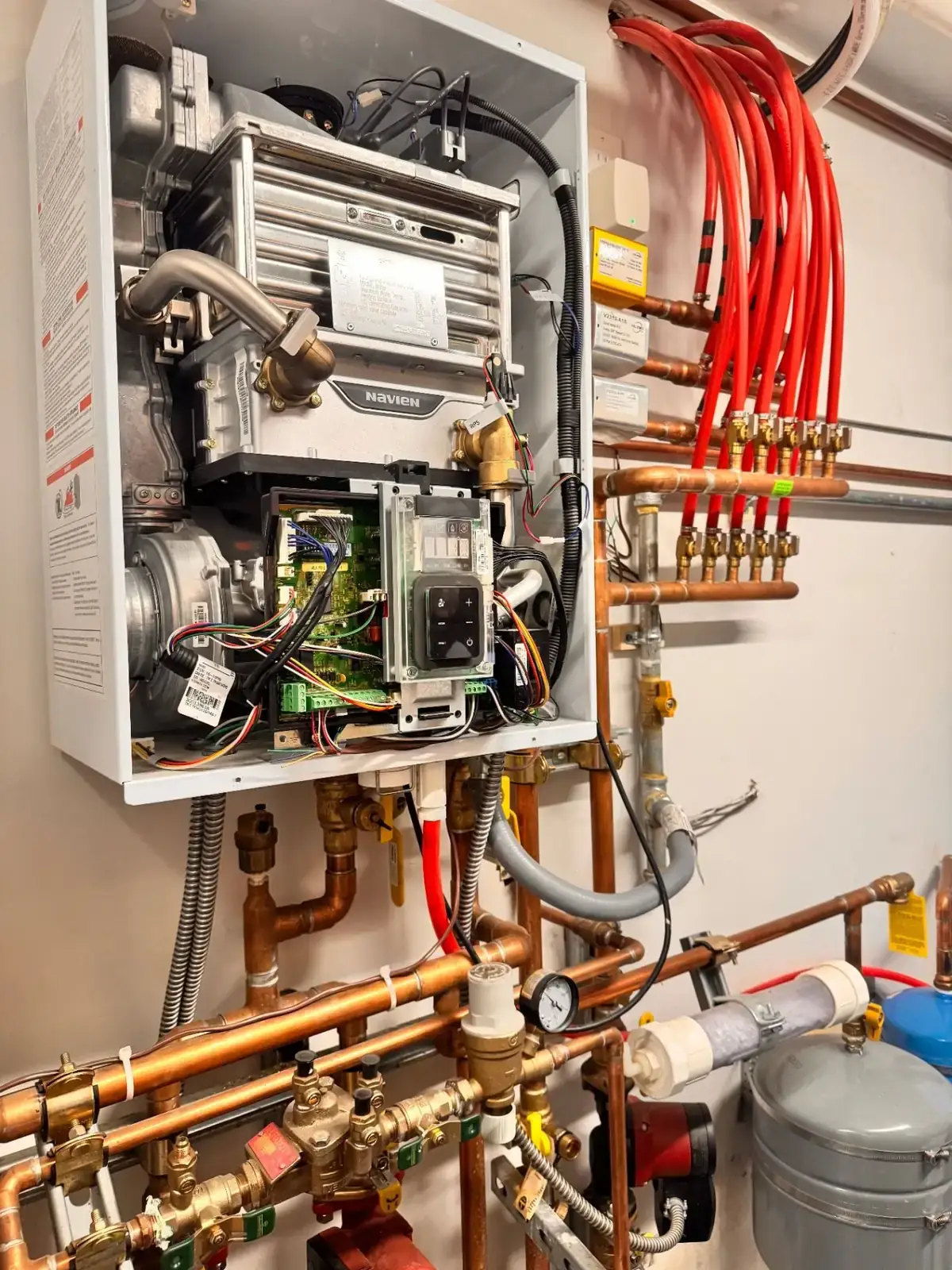
We typically design one zone per major living area with a dedicated manifold loop per 250–300 sq ft. That gives the homeowner real room-by-room control and lets the boiler modulate cleanly. Skimping on zones to save manifold cost is the most common regret we hear from owners with first-generation systems.
Pairing with the right heat source
A condensing boiler with outdoor reset is the conventional pairing. For all-electric homes we increasingly specify an air-to-water heat pump, which delivers 95–110°F water — a perfect match for radiant — at a COP between 3 and 4.
Realistic budget ranges
For a typical Bay Area remodel, expect $14–22 per square foot installed for staple-up retrofit including PEX, manifolds, controls, and heat source share. Slab installs run lower per square foot but require coordination with the concrete sub. Whole-home new construction projects often land between $35,000 and $90,000 depending on scope and heat source.
Planning a project like this?
We'll scope the work, model the rebates, and put a real number on it.